List the items required for each style
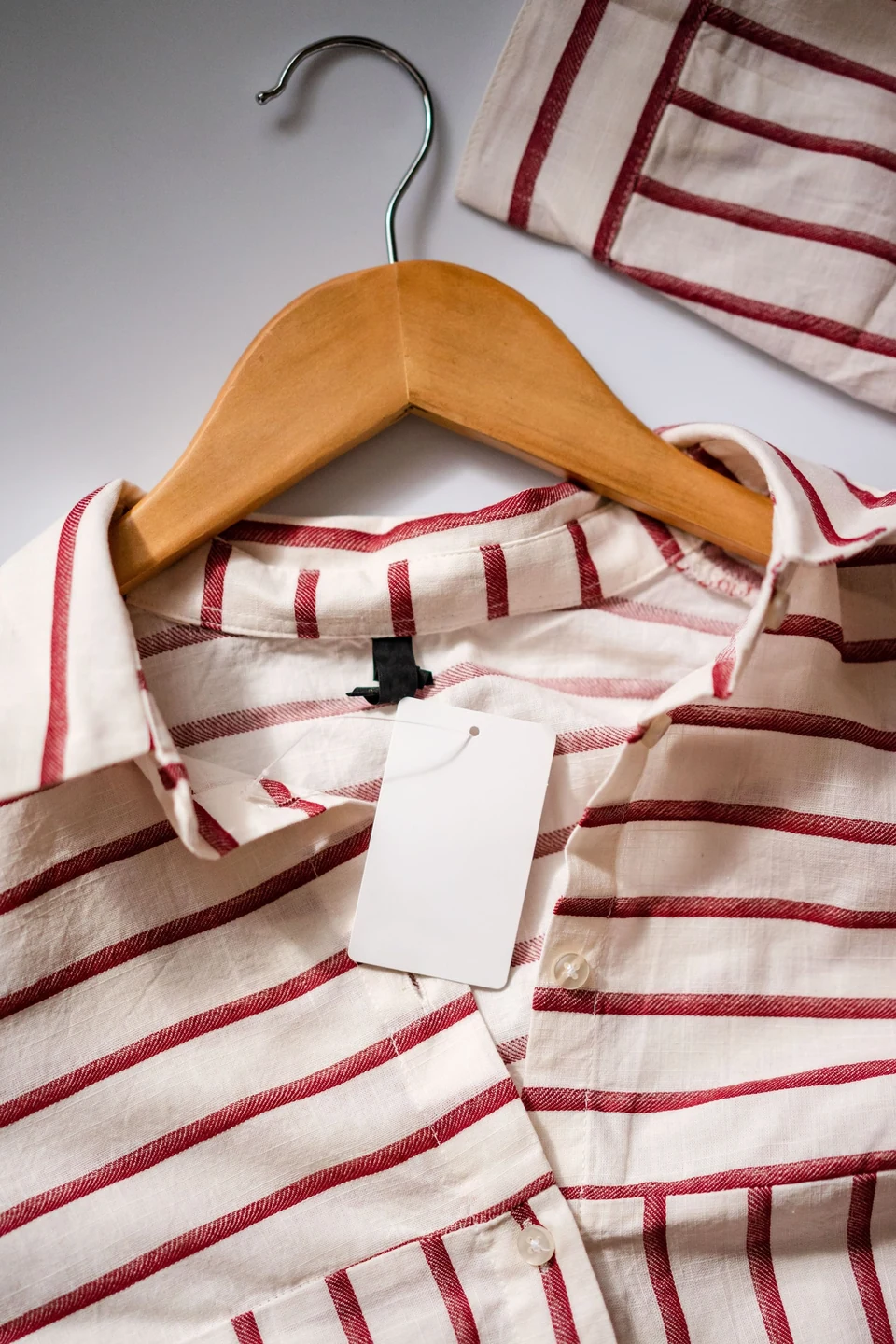
Identify the brand label, size label, care information, hangtags and any garment artwork required for the style. Provide the dimensions, placement and attachment or application method for each item. Explain where the requirements vary between colours, sizes or products.
Keep the files organised by style and version. Mark approved artwork clearly and separate it from designs that still need changes. Include the written content as well as the visual layout so wording, size information and product identification can be checked consistently.
Review the details on the garment
Labels and artwork need to work with the seam construction, lining and intended fit. Confirm placement using dimensions and photographs during sampling. Review whether the chosen attachment method affects the visible finish or the way the garment is worn.
State the required colour and physical finish, then identify the approval needed before the item is used in production. Keep the approved label or artwork record connected to the garment sample. Changes to the fabric or construction may require its placement or application to be reviewed again.

Confirm product information and packing
Care and product information must be confirmed for the actual material, garment and destination market. Identify who supplies and approves that content. Keep unresolved wording visible in the project record instead of treating an early artwork file as final approval.
Describe the folding, size and colour identification, individual packaging and carton information required for the order. Explain how packing instructions connect to different styles and quantities. Include any documentation or labelling requirement that the receiving team needs to match the shipment with the order.
Control changes before production
Bring the approved label, artwork and packing information into the final production brief. Check that the file names and versions match the approval record. Make any open decision clear before materials are ordered or the production stage that uses them begins.
When a brand detail changes, issue a new revision and identify the affected styles. Ask how the change affects samples, material availability, costs and scheduling. Keep the accepted revision with the garment specification so the production order follows one agreed set of instructions.
Share your label artwork and packing requirements with YA QIAN alongside the garment brief to discuss private label development.